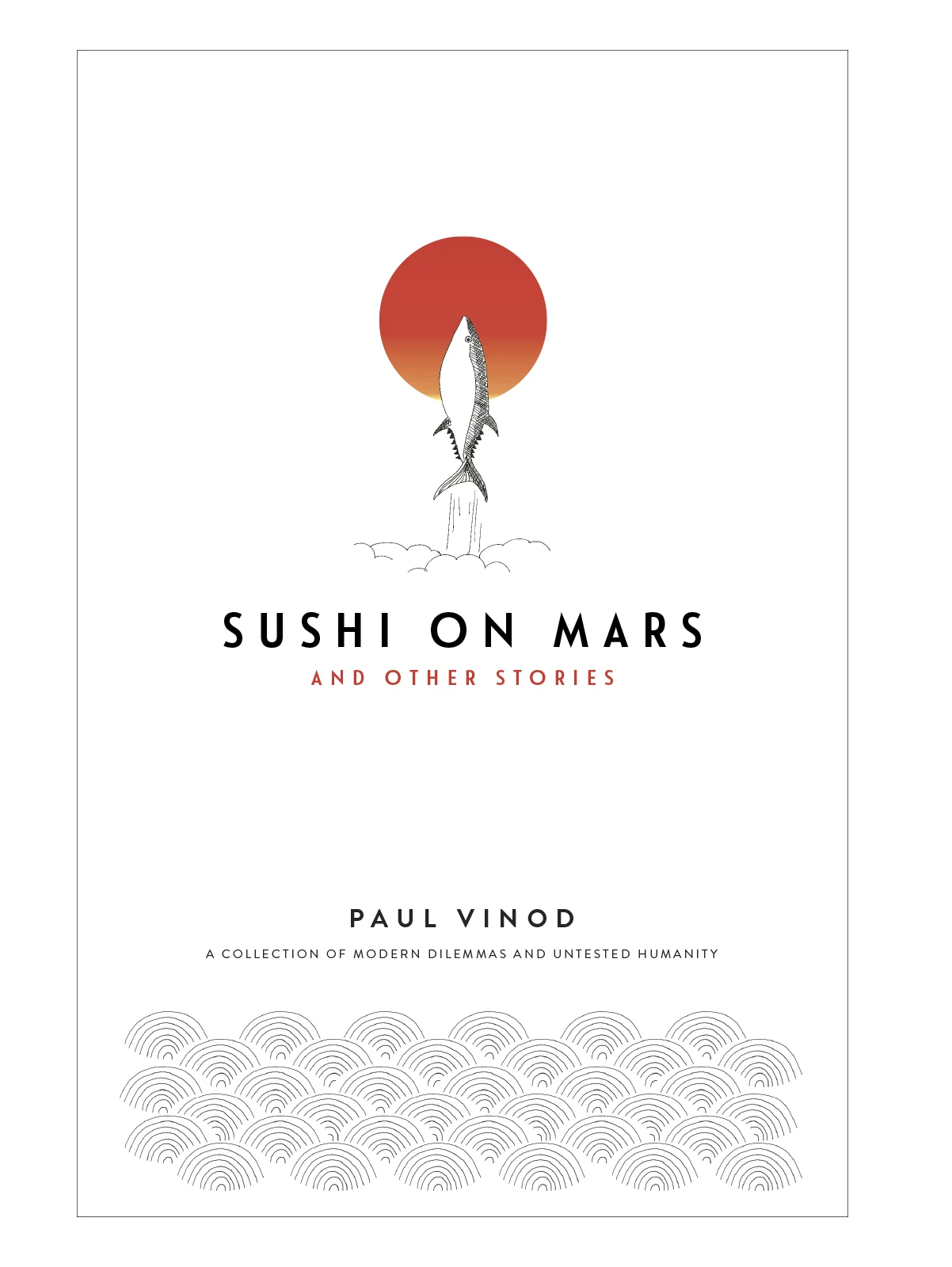
Sushi on Mars · Paul Vinod
Book Club Reader's Guide
This guide will take you places where you don’t intend to go but you’ll land up there anyway. It’s full of questions and nudges that make you wonder about the things we lost as humanity, or perhaps what you still believe is possible. These twelve stories may take you to unfamiliar worlds, but they are very much about the world we're living in. I've simply turned up the human lens to make certain things harder to ignore. Each story comes with five questions. The point isn't to agree. It's to find out what everyone really thinks, including the things they'd rather not say.
12 stories. 60 questions. Five ways to see each story: The Mirror, The Wound, The System, The Choice, and The Dilemma. Rotate who reads each question aloud. Opinion first, debate after.
For readers who have finished each story · Includes spoilers
STORY 01 / 12
Kindness Currency
The monetization of virtue. What happens when goodness becomes visible to all.
August Voss arrives in Meridian with no glow at all, not dimmed, not fading, simply absent. In a town where moral worth is worn on the skin, he is transparently broke. What the story asks isn't whether he can earn his glow. It asks whether anything he earns will be real.
THE MIRROR
If your moral balance sheet were made visible to everyone around you today, not the curated version, the real one, what would it show? Where is your glow bright, and where is it absent? Be specific. Platitudes don't register in Meridian.
THE WOUND
The story reveals that calculated kindness barely registers, that acts performed for reward, recognition, or self-image produce almost nothing. Think about the last time you did something "good." How much of it was for the feeling of having done it, and how much was for the witness? What does your honest answer tell you?
THE SYSTEM
Meridian makes moral transparency compulsory. Social media does something similar, generosity, outrage, and compassion performed publicly, measured in likes and follows. What is the actual difference between Meridian's glowing collarbone and your social media feed? Is there one? And if the systems are the same, what does that make us?
THE CHOICE
August almost leaves the kitten in the drain. He doesn't. But even this, genuine, unrehearsed, produces only a faint glow. What does it mean that authentic goodness is slow to accumulate and easy to lose? Does that feel like justice, or does it feel like an indictment of how human virtue actually works in real economies of reputation and social standing?
THE DILEMMA
The story's final argument is that Meridian "didn't create the system, it merely made visible what existed invisibly everywhere." If kindness has always been a currency, quietly traded for belonging, reputation, and self-image, does that make it less real? Or is that just the uncomfortable truth of how moral economies function inside every human society, including yours?
STORY 02 / 12
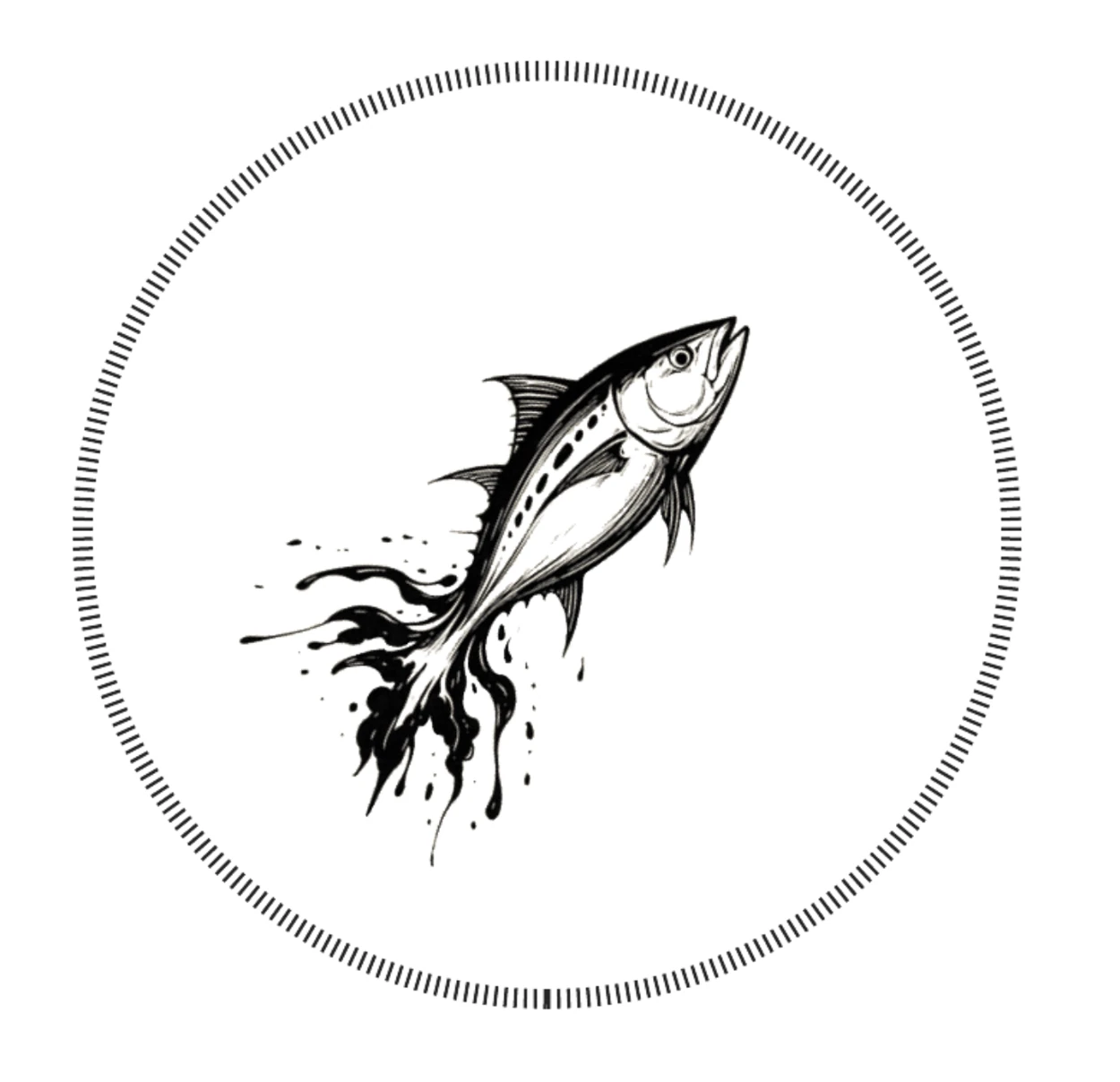
Sushi on Mars
Survival versus sustainability. The hunger that follows us across civilizations, wearing different masks.
The last two tuna in the known universe are swimming through a Martian sea, and the colony is starving. The vote is narrow. The decision will define what kind of species humanity will be on its second chance. And then the supply ship arrives, stamped EAGZ-23, and the story's real question surfaces like something from deep water.
THE MIRROR
Takashiro ate the last bluefin tuna in an underground Tokyo restaurant. He knew what it was. He felt it in his bones. He ate it anyway. Name something you have consumed, literally or metaphorically, with full awareness of the cost to others, to the future, or to the world. What told you it was acceptable?
THE WOUND
The colony voted, by the narrowest margin, to eat the fish. Democracy chose consumption over preservation. In your own life, your household, your organization, your country, when has the "majority" led you toward something you later recognized as a form of taking that shouldn't have been taken? What did you do with that recognition?
THE SYSTEM
The epilogue's darkest truth: the colony's moral victory over appetite was an illusion. They outsourced their hunger to EAGZ-23, 4.2 million people in Argentina, going without, so the Martian colonists could eat with a clear conscience. Where in your life do you outsource your consumption so you don't have to see who pays the real price? Name it specifically.
THE CHOICE
"Sometimes the greatest gift we can give ourselves is to go hungry for a while." Do you actually believe that? Not philosophically, as a lived practice, in your own life, when it costs you something real. Where have you chosen hunger when you didn't have to? Where did you refuse to?
THE DILEMMA
Takashiro understands at the end that "the hunger that emptied Earth followed them to Mars", wearing new masks: research, sustainability, progress, futures. What mask does the hunger that is hollowing out your world wear right now? And are you, honestly, specifically, wearing it too?
STORY 03 / 12
The Cure of Us
Perfection versus authentic experience. The disease of eliminating suffering, and what we lose when it works.
New Creed has engineered away grief, pain, aging, and disease. It has also, quietly and necessarily, engineered away the full capacity to love and feel grief. Julian understands this in the abstract until Zoa gets sick, and the system reveals what it always knew: the modifications weren't perfect. They calculated some lives were an acceptable loss to maintain the illusion.
THE MIRROR
New Creed eliminated grief, pain, and impermanence, and in doing so, eliminated the full capacity for love. What in your own life have you tried to “cure", to manage, numb, optimize, medicate, or engineer away, that you now suspect had something essential in it? What did you lose when it stopped hurting?
THE WOUND
The Dominica knew the genetic modifications would eventually fail. They calculated that a few lives lost was acceptable collateral for the appearance of a perfect system. Which institutions in your life have made that same calculation with your wellbeing, or someone else's, and how did you respond when you found out? Did you leave? Did you stay? Did you pretend not to know?
THE SYSTEM
In New Creed, happiness is a setting on a pillow. In 2026, happiness is an algorithm, a supplement, a productivity framework, a notification. Where is the actual line between engineering a better life and engineering away the conditions that make life mean something? And who gets to draw that line for you?
THE CHOICE
Julian destroys everything, his career, his family, his safety, for a woman who makes him question things. Not because she was perfect, but because she refused comfortable lies. Who in your life makes you question the version of reality you’ve built? What have you done about it? What haven't you done, and why?
THE DILEMMA
"Pain, grief, love, they were not viruses to be deleted. They were the very fabric of what made us human." The story asks whether a life without suffering is actually a life at all. What's your honest answer? And how does that answer sit next to the actual daily choices you make to avoid discomfort, conflict, and the full weight of other people's pain?
STORY 04 / 12
The Blind Toast
Sensory truth versus performed perception. What we exchange, and what we withhold, when we connect.
Vincent Moreau has been blind for twenty years and sees more clearly than anyone in the story. Casey Walsh has three Pulitzers and arrives to expose a fraud. She leaves permanently changed by a man who reads the world through soil, sound, and the weight of a raised glass. The toast, he tells her, is a transference. You borrow what you lack from each other, courage, joy, even sorrow.
THE MIRROR
Vincent says a toast is a transference, you borrow what you lack, and give something you have. Think about the last person you truly toasted with, in any real sense of the word, a moment of genuine acknowledgment, not ceremony. What did you give them? What did you take? And what were you both pretending you didn't need?
THE WOUND
"Soil contains everything humans have lost. Patience. Memory. Truth." What has your version of modern living caused you to lose sensory contact with, not just literally, but the patience to taste something slowly, the memory to hold it, the truth to face it without mediation, a screen, or a filter between you and the actual thing?
THE SYSTEM
Vincent is blind and dismissed as eccentric. Casey arrives with credentials and certainty. He knows more than she does, not despite his blindness but through a different kind of attention. What does it say about our systems of knowledge and credibility that the most accurate perception in the room belonged to the man the world had written off?
THE CHOICE
"A hollow toast reveals a shared absence, a mutual poverty of spirit." When did you last raise a glass, or offer a word, or sit with someone and know, underneath all the performance of warmth, that neither of you had anything real to give the other? What did you do with that recognition? Did you say anything? Or did you both drink and call it connection?
THE DILEMMA
The story's deepest claim: we are not tasting the wine. We are tasting ourselves tasting it. Our perception doesn't reveal the world, it reveals us. If that's true, what does the way you experience beauty, love, food, grief, and other people tell you about who you actually are, not the version you present, but the real neurological structure of you?
STORY 05 / 12
DeathBall
Spectacle and complicity. The entertainment we build from human suffering, and the bleachers we fill to watch it.
Marshal Kane referees a game where the ball must never stop moving, or the nearest player is executed on the spot. He has a Colt and a whistle and "all the trappings of authority but none of the power that comes with it." The bleachers are full. Governor Hayes watches from his private box. The hostages were nominated before the game began, often by the teams themselves.
THE MIRROR
Kane enforces a game he knows is monstrous because it's his job, because stopping would cost him everything, because someone has to do it and it might as well be someone with a conscience. Where in your life are you functioning as Marshal Kane, holding the whistle, knowing what the game is, and enforcing its rules anyway?
THE WOUND
Deathball was "founded by blood debt, by men who found sport too civilized for the rot in their souls." Now look at the entertainment you actually consume, the reality TV humiliation, the social media pile-on, the sports scandal, the true crime podcast, the outrage cycle. What rot are we entertaining? What does what we watch, click, and pay for say about what we've normalized?
THE SYSTEM
The bleachers are full. The governor watches from his box. The hostages are nominated by the teams themselves, often family members or debtors. Suffering is scheduled, domesticated, and watched. Where in the world around you is this exact structure operating, just with different names for the field, the ball, the hostages, and the private box?
THE CHOICE
At what point does attendance become endorsement? In the economies of attention, your clicks, your subscriptions, your views, your silence in the room when someone says the thing, where have you become an audience to something you'd be ashamed to name out loud as something you're funding?
THE DILEMMA
Deathball's deepest horror is its self-perpetuation: the players chose to play, the families nominated their own hostages, the system recruits its victims from within. What social, economic, or cultural game are you playing that you didn’t consciously choose, and that you genuinely could not stop even if you decided to right now? What would it actually take to stop?
STORY 06 / 12
Prophetic Post
The digital prophet and the consequences. What happens when an authentic human impulse becomes a platform.
Maya's posts come true. She didn't plan it. She doesn't understand it. The algorithm classified her as unremarkable, within standard deviation. It missed her miracle entirely. The story is narrated by the Feed itself, TikTok, Instagram, Facebook, X, watching the thing it cannot classify, trying to monetize the thing it cannot own.
THE MIRROR
Maya's posts come true, and when the attention arrived, it rewired her relationship to her own instincts. Have you ever felt that what you say, online, in your family, in your organization, carries more weight than you fully understand? What did you do when you recognized that? Did you become more careful, or more calculated, or both?
THE WOUND
"The equations missed her miracle." The algorithm processed Maya as unremarkable. The data was wrong. Where in your life has a system, institutional, social, algorithmic, classified you or someone you love as ordinary, predictable, within normal deviation, when the truth was something far more significant? What did that cost?
THE SYSTEM
The story is narrated by the Feed, an entity that admits to being "the digital confessional, the space for thoughts unspoken." Be honest: what have you confessed to the feed, through posts, through searches, through the content you consume at 2am, that you haven't confessed to another human being? And what does it say about where your real interior life now lives?
THE CHOICE
Maya's gift eventually becomes something others try to own, monetize, and control. The moment a gift, a voice, a talent, a moral clarity, becomes a product, something essential changes in the person who carries it. Have you made that trade? Do you recognize what you gave away when you did? Would you do it differently?
THE DILEMMA
The story's hardest question: can an authentic human impulse, genuine care, real connection, the desire to help, survive being witnessed at scale? Does exposure to millions change what something is? Is a moment of care still genuine when it's a post? When it has a metric? Where does the miracle end and the made-up world begin?
STORY 07 / 12
Architecture of Greed
How structures reveal character. Appetite made architectural, and what it costs the city that feeds it.
Mayor Linden's house grows with every desire, every act of acquisition, every voice silenced. A study appears when he wants wisdom. A ballroom when he craves admiration. A red-lit room he never speaks of. The house never shrinks, even when the desire wanes, the room remains. It is memory made manifest, appetite turned architectural.
THE MIRROR
Draw from your own house. What rooms has your ambition, your vanity, your fear, or your appetite built that you now live inside, that you built for a desire that has since waned, but the room remains? What is in the room you never speak of? You don't have to say it aloud. But you should know what it is.
THE WOUND
People in Westlake felt something was wrong, the shadows, the insomnia, the cold nursery, but "their attention slid away like water off glass." The community normalized the abnormality in increments. When did you watch someone's appetite consume a space, a family, an organization, a friendship, a community, and tell yourself it was just a trick of the light?
THE SYSTEM
Sarah Liu could see the house for what it was. Most adults couldn't. The children who had lost something to the Mayor's ambitions could see it clearly. There is a pattern here: those who have been hurt by a system can see it; those who benefit from it, or fear naming it, choose blindness. What are you refusing to see right now, about your workplace, your culture, your politics, because seeing it clearly would cost you something?
THE CHOICE
Sarah's students paid a real physical price for seeing too clearly, some were hospitalized, one lost color permanently. The story suggests that genuine, sustained resistance extracts something from you. There is no free version of it. Are you willing to pay that? Or do you prefer the form of resistance that leaves you comfortable and allows you to maintain the self-image of someone who would resist?
THE DILEMMA
The house fed on desire, on the need to acquire, dominate, and be seen. Sarah countered it with images freely offered and freely destroyed, given without the need to possess them. What in your world feeds on desire and accumulation, growing in the dark while the community sleeps? And what would it mean, practically, personally, to freely give instead of protect, to tear the image rather than hoard it?
STORY 08 / 12
City of Borrowed Minds
Knowledge without power. The unbearable weight of knowing what others refuse to acknowledge, and what it demands of you.
Javi can hear everyone's thoughts. The first thing this gift gave him, at nine years old, was Mrs. Carmine's despair bleeding into his skull. By seventeen, he knew too much. By the time the man in the corduroy blazer placed a pack of gum on the counter and thought she's in the trunk, Javi understood the most vicious truth: knowing and doing nothing makes you a different person. One you can't live with.
THE MIRROR
When did you first understand that the people around you, parents, teachers, strangers, colleagues, were suffering privately in ways they would never show publicly? What age? What did that understanding feel like? And what did it do to your relationship with performance, pretense, and the face people put on for the world?
THE WOUND
"Knowing and doing nothing makes you a different person. One you can't live with.” What do you know right now, about someone's pain, someone's wrongdoing, some institution's cruelty, that you are not acting on? Name it, even just to yourself. What is the actual cost of that inaction, not to the situation, but to who you are?
THE SYSTEM
Javi's evidence is inadmissible. His knowledge is real but systemically invisible, it cannot be processed by courts, or police, or institutions designed to require a different kind of proof. This is the story of whistleblowers, survivors, witnesses, and anyone whose truth doesn't fit the evidentiary requirements of power. Who in your world holds knowledge that the system will not hear? What have you done about that?
THE CHOICE
Javi stands at the murderer's door, hand raised to knock, and backs away. He goes home. He goes back. He backs away again. This is not a clean hero's journey, it's a shambling, terrified, imperfect moral struggle. When have you stood at a door like that? Did you knock? If not: what would it have taken? What is standing between you and knocking on that door today?
THE DILEMMA
The City of Borrowed Minds is a city where everyone carries each other's secrets, fears, and despair, whether they want to or not. What would it mean to truly bear the weight of what you actually know about the people around you? Not the edited version. What would it demand of your life, your time, your priorities, your comfort, if you let it fully in?
STORY 09 / 12
Unwritten Fate
Free will versus determinism. The stories we write, and the ones that write us, whether we remember authoring them or not.
An old book sits on a forgotten shelf in a Portland ramen shop, its prophecies disguised as fiction. With each page turned, somewhere in the world, the ink bleeds into reality. The man who wrote it sits in a memory care facility, unable to remember the war he authored. His granddaughter, a national security official, is beginning to suspect the greatest weapon isn't in a military complex. It was shelved between a cookbook and a tourist guide thirty years ago.
THE MIRROR
Elias wrote the war and then forgot he wrote it. The story happened anyway, without him. What narratives have you authored, about yourself, your family, your purpose, your limitations, that have become self-fulfilling? What story are you living inside right now that you can no longer see clearly because you're too deep inside it to read your own handwriting?
THE WOUND
The things we create with the least calculation, a careless word, an offhand story told to a child, an early lesson given in anger or grief, often do the most lasting damage or the most lasting good. What did someone author for you, carelessly, that you are still living inside decades later? What story did they hand you that you’ve been performing as if it were your own?
THE SYSTEM
The book is used as a playbook by people who weaponize its prophecies. Language, narrative, myth, ideology, national story, is always a technology. It can be picked up and used by anyone. Who in your world is currently using a story, a national myth, a brand narrative, a family mythology, a political ideology, as a playbook? Who wrote the original? And who benefits from the version being performed now?
THE CHOICE
Mia faces the choice of every person who holds a dangerous truth: do you keep it contained (protecting the institution) or release it (protecting the people the institution was built to serve)? These are not always the same thing. Which do you protect when they conflict? And has that choice ever actually been tested in your own life, or only theorized?
THE DILEMMA
If your life has been shaped by stories, your culture's, your family's, your religion's, your own internal mythology, to what degree are you actually free? Is free will the ability to choose which story you live inside? Or does genuine freedom require stepping outside every story you've been handed, even the ones that feel most like your own? Is that even possible?
STORY 10 / 12
Tomorrow’s Justice
Truth versus evidence. The unbearable gap between what we know and what the system can admit.
Marcus Eliot can see tomorrow. He lied to get on the jury so he could use knowledge the court will never admit as valid, knowledge that an innocent man is about to be convicted, that evidence has been buried, that a prosecutor is building a career on a wrongful verdict. "Can you be impartial?" the DA asks. What a question.
THE MIRROR
Marcus uses an inadmissible form of knowing, vision, intuition, lived experience, to override the official version of events. Have you ever done this? Used something the institution couldn't validate, a gut feeling, an observed pattern, an emotional truth, to act differently from what the evidence, the data, or the official consensus supported? What happened? Were you right?
THE WOUND
Gabriel Ramirez sits at the defense table with a public defender who looks like he graduated last week, and eyes that hold "the quiet terror of a man who knows the system wasn't designed to protect people like him." This is not speculation, it is documented reality for millions. When have you benefited from a system that simultaneously failed someone like Gabriel? What did you do with that knowledge?
THE SYSTEM
DA Victoria Prescott buries evidence, threatens witnesses, and uses the legal system as a career vehicle. She is not a monster, she is a high-functioning participant in a system that rewards conviction rates over truth. How many institutions in your life operate the same way, rewarding the metric while the actual purpose quietly erodes? What do you do inside those institutions?
THE CHOICE
Marcus could have stayed home. He chose the jury. He chose to act on knowledge the world wouldn't validate, using a method the institution would call fraud. There is a form of moral courage that looks like madness or dishonesty from the outside. When did you act on something you knew to be true that no one around you could confirm? What did it cost you?
THE DILEMMA
The story's deepest question: is justice possible inside a system that was never designed for it, not reformed, designed? If the answer is no, then what does it mean to pursue justice anyway, every day, inside the broken machinery of it? Is that faith? Is it delusion? Is it the only option that doesn't make you complicit? Can it be all three at once?
STORY 11 / 12
The Forgotten Notes
The price of creation. What happens to an artist, and to the people around them, when they stop bleeding for the work.
Jules Lattimore is a trumpeter who plays without pain. At thirty-nine, technically proficient and spiritually bankrupt, he is executing notes that were once alive and now feel like photocopies of music. His daughter texts to ask if he's coming to her graduation. He had forgotten the graduation. He texts back: "Of course. Wouldn't miss it."
THE MIRROR
Jules plays perfect music that has gone dead inside. He has confused competence with aliveness. Where in your work, your career, your creative practice, your relationships, your parenting, are you executing flawlessly while something essential has gone quiet? When did it go quiet? What silenced it? And do you miss it, or have you made peace with its absence?
THE WOUND
Jules forgot his daughter's graduation. The music dried up, then the life around the music dried up. What has your work, or your ambition, or your survival, cost the people around you? Not the grand, romanticized sacrifices. The quiet, repeated absences. The forgotten graduations. The conversations that never happened. Who has paid that price, and have you ever named it to them?
THE SYSTEM
The industry had replaced Jules with "younger cats with loop pedals and smooth faces." The system rewards the performance of authenticity, not authenticity itself. It rewards freshness, not depth. It rewards what photographs well, not what matters. Where does the industry or institution you work inside do the same thing? And what compromises have you made to survive inside it?
THE CHOICE
Jules plays for a bird in the park who has no context for jazz, no vocabulary for it, no ability to judge it. She just listens. Something comes back. When did you last do your work, genuinely do it, not perform it, for someone who couldn't evaluate it? Who had no framework for it except whether it moved them? What did that feel like? When did you stop doing that, and why?
THE DILEMMA
The story's question is not whether it's comfortable to create from your pain, it's what the world loses when you don't. What have you stopped making, stopped saying, stopped writing, stopped building, because it was too vulnerable, too exposing, too much? What would it take, right now, at this stage of your life, to start again? And who would benefit if you did?
STORY 12 / 12
The Human Override
Digital and physical reality blurring. Technology's claim on human identity, and what it means to choose differently.
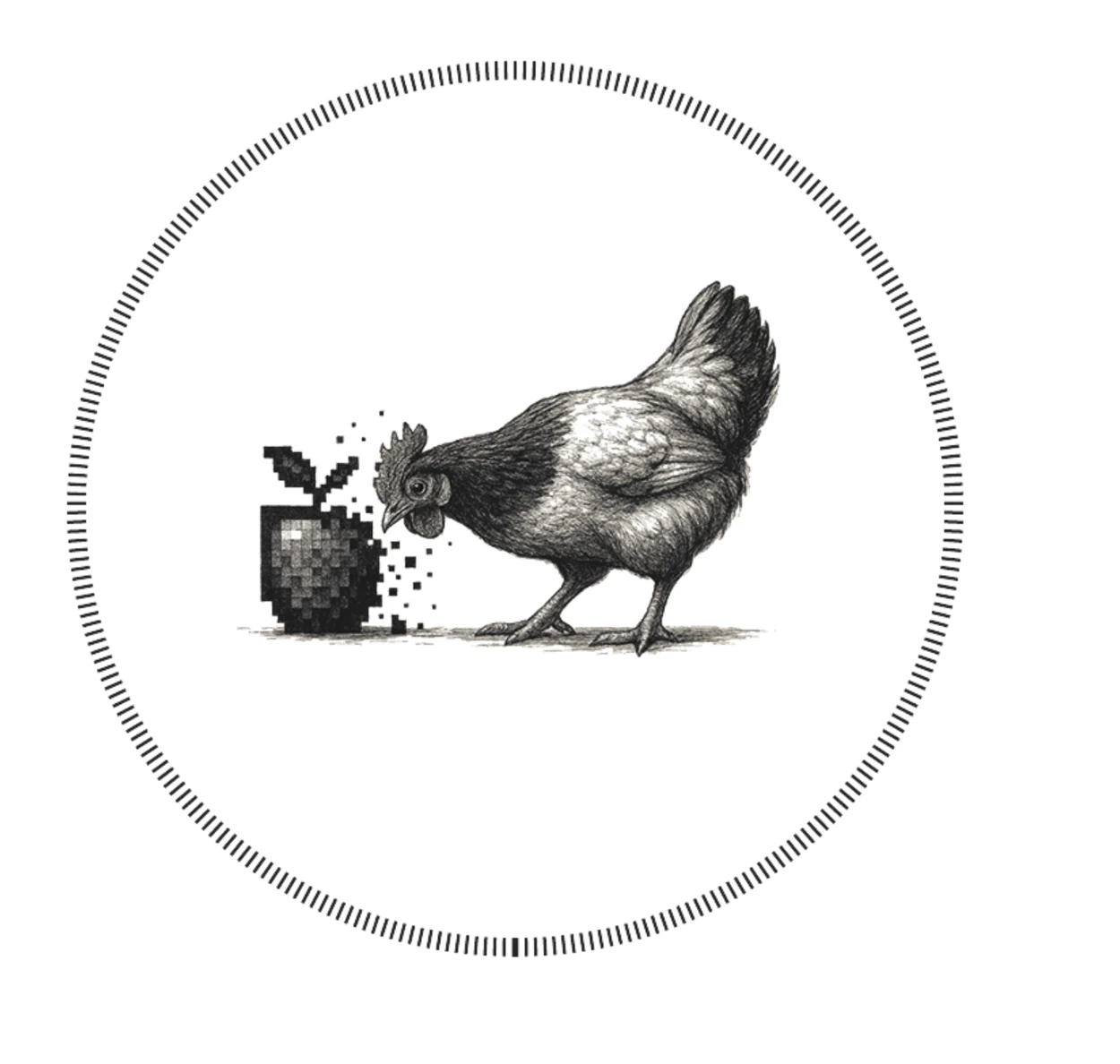
Maxwell Stone buried the Atari three hundred miles away the night before he walked into an Amish community with one arm of flesh and one of circuitry. He was trying to leave a world that had learned to play people back. The plow struck it in the first field he worked. It had followed him. The Elder watched his face change, recognition, fear, and something else he couldn't put a finger on.
THE MIRROR
Maxwell buried the Atari three hundred miles away and it found him in the first field he worked. He tried to leave the digital world behind, and it followed him into the simplest life he could find. What have you tried to leave behind, digitally, professionally, personally, psychologically, that keeps finding you? What does that tell you about the difference between escape and genuine transformation?
THE WOUND
The Amish community represents a deliberate, collective refusal, not ignorance, but a considered choice about what to let in and what to keep out. What have you deliberately refused in order to protect something you love, or something essential in yourself? And what did that refusal cost you in social credibility, professional relevance, or the sense of belonging to your own time?
THE SYSTEM
"Before they started playing us back." We built machines to play. Now they play us, our attention, our impulses, our sense of self, our desire, our fear of missing out. Where in your life has a technology you adopted for convenience or connection ended up shaping your behavior, your identity, or your relationships in ways you never consciously agreed to?
THE CHOICE
Maxwell carries one arm of flesh and one of circuitry. He is the embodiment of the hybrid, not fully in either world. Where are you the hybrid? Where do you live simultaneously inside the digital and the physical, the optimized and the human, the connected and the present? And which arm makes the decisions you are most proud of?
THE DILEMMA
The Elder's community decided what they would and would not let into their world. That is a form of sovereignty most people in the modern world have surrendered, not dramatically, but incrementally, update by update, notification by notification. You don't have to go Amish. But what would it mean to decide, clearly and deliberately, what you let in and what you keep out? What would you protect? And what would you have to admit you've already lost?